Ennoconn Technologies
Ennoconn Technologies,Ennoconn Corp. 樺漢科技
Linking Executive Compensation to ESG-related Performance Evaluations
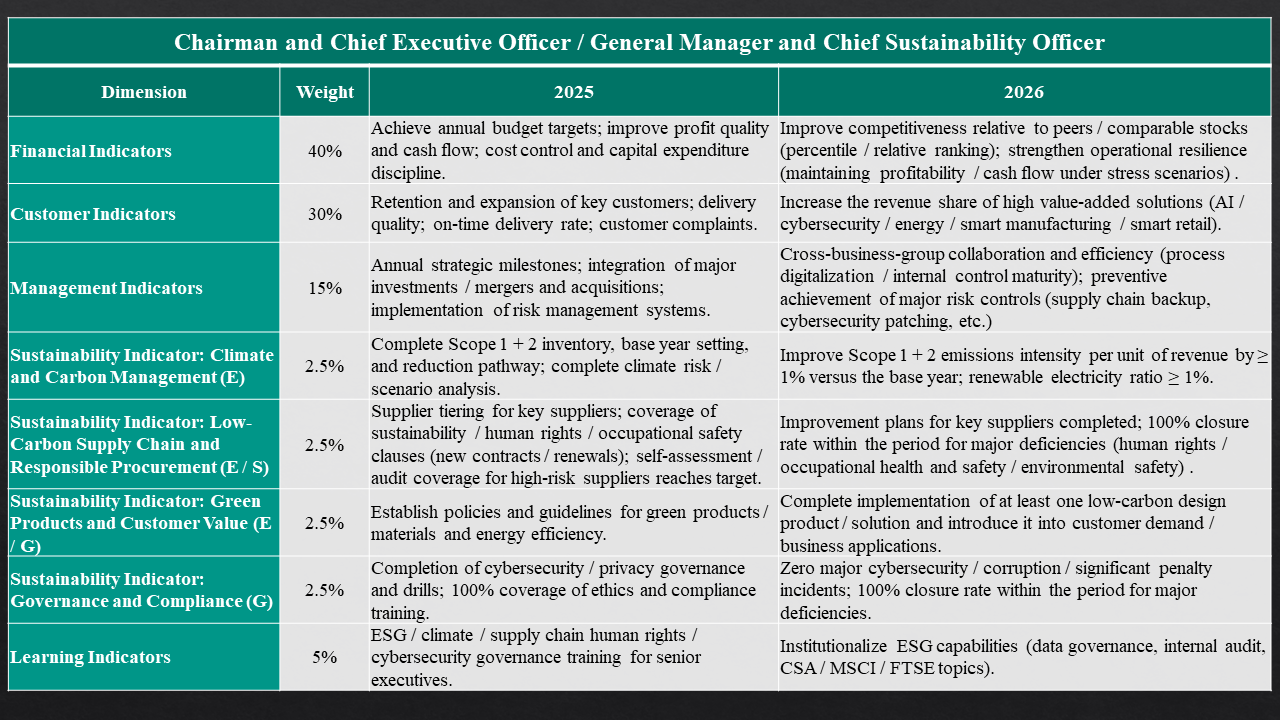
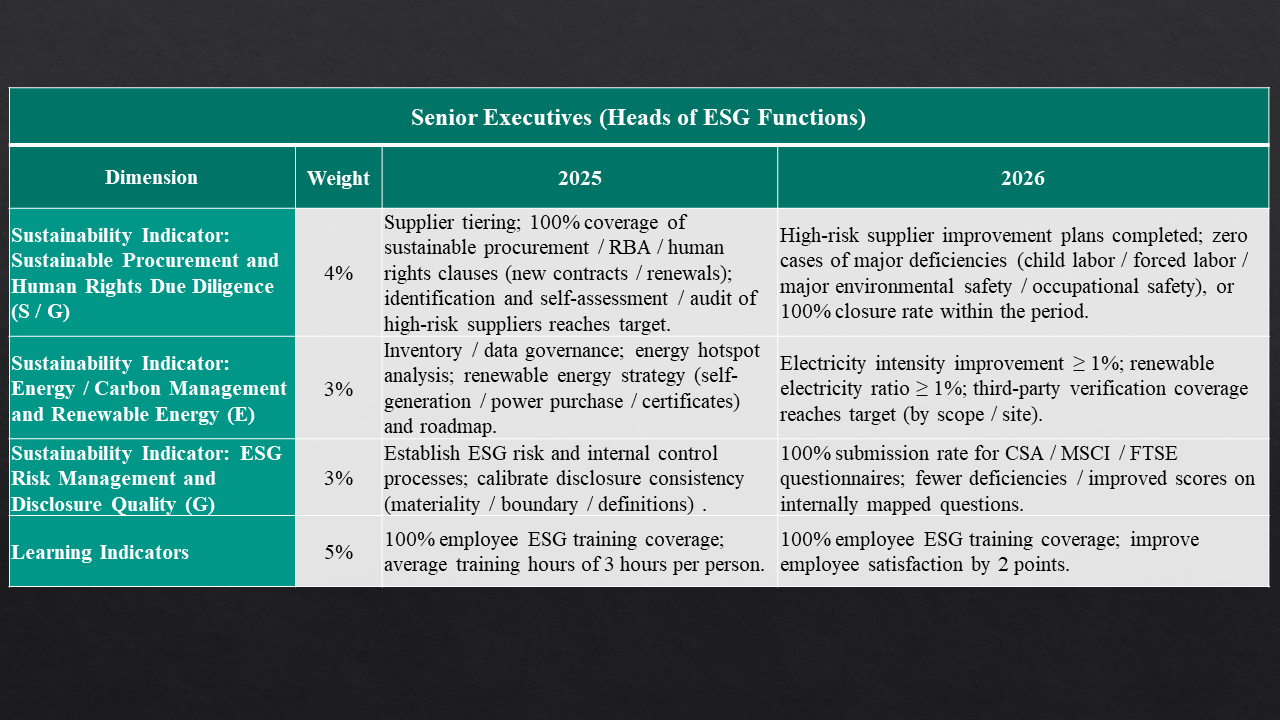
The Company’s performance evaluation system for its senior management team classifies evaluation subjects into two tiers based on responsibilities: “Chairman and Chief Executive Officer / General Manager and Chief Sustainability Officer” and “Senior Executives (Heads of ESG Functions)”. For the highest decision-making level, the evaluation metrics include Financial Indicators weighted at 40%, Customer Indicators weighted at 30%, Management Indicators weighted at 15%, and Sustainability Development and Learning Indicators weighted at 15%. In 2025, the Chairman and Chief Executive Officer led the team in completing the Scope 1 + 2 greenhouse gas inventory and emissions reduction pathway planning, and implemented sustainability and human rights clause coverage for key suppliers. For Senior Executives (Heads of ESG Functions), the evaluation focuses on the implementation and execution of sustainability strategy. In 2025, the Company achieved 100% ESG training coverage for senior management (an average of 3 hours per person) and established ESG risk management and internal control processes.
In 2026, management’s evaluation priorities will include: reducing Scope 1 + 2 carbon emissions by at least 1% annually, achieving a renewable electricity ratio of at least 1%, driving the implementation of at least one low-carbon design product solution, and improving scores in international ESG questionnaire assessments. These targets demonstrate the Company’s commitment to sustainable transformation.